
ANTERIOR HIP REPLACEMENT: A MUSCLE-SPARING APPROACH TO MOVING BETTER
William Austin, MD | Orthopaedic Surgeon | Traverse City, Michigan
Direct anterior hip replacement is a modern surgical technique designed to relieve hip arthritis pain, restore mobility, and help patients return to the activities they enjoy. By accessing the hip joint through a natural interval between muscles, this muscle-sparing approach may offer advantages during the early stages of recovery.
What Is Anterior Hip Replacement?
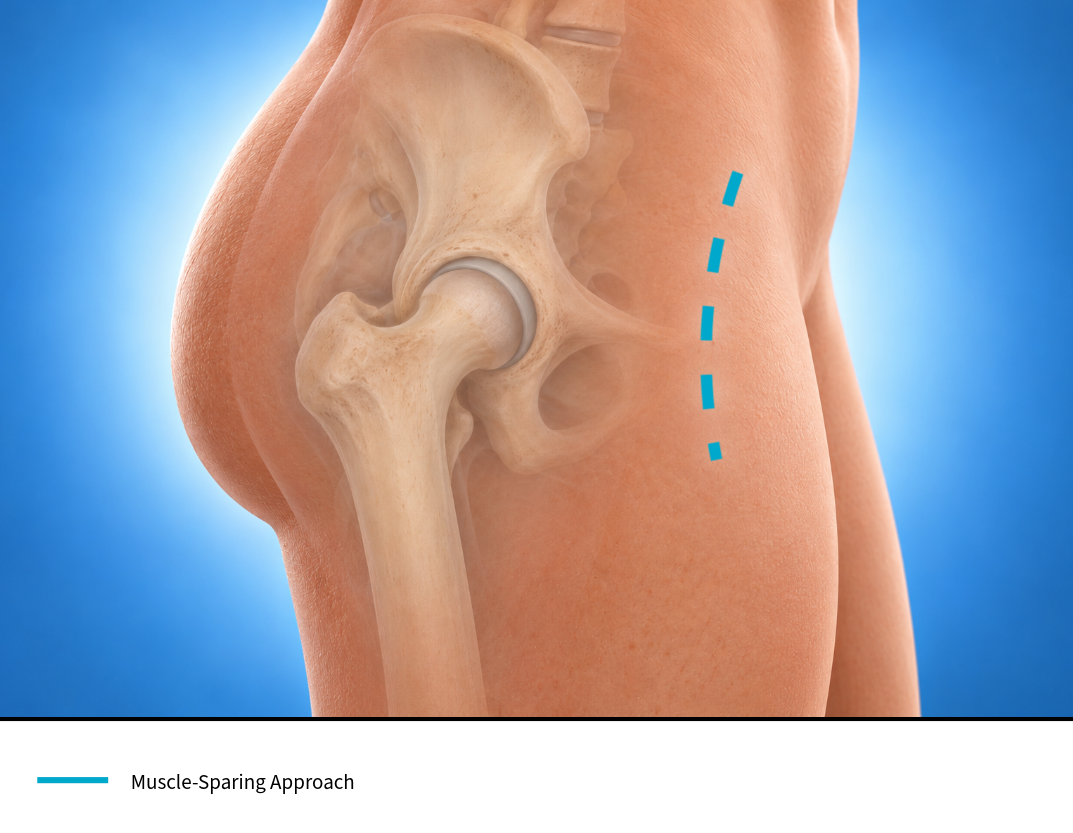
Direct anterior hip replacement is a technique for performing total hip replacement in which the surgeon accesses the hip joint from the front of the hip rather than from the side or back.
During surgery, the damaged cartilage and bone are removed and replaced with artificial components designed to restore smooth joint movement, reduce pain, and improve function.
The anterior approach is commonly referred to as a muscle-sparing hip replacement because the surgeon typically works between muscles rather than routinely cutting or detaching major muscle tendons to reach the joint.
The ultimate goal is lasting pain relief, improved mobility, and a better quality of life.

Dr. William Austin
Board Certified Hip and Knee Replacement Specialist
Traverse City, MI
Potential Benefits of Anterior Hip Replacement
1. Muscle-Sparing Surgical Technique
The anterior approach utilizes a natural interval between muscles, allowing access to the hip joint without routinely detaching major muscle tendons. Preserving these attachments may help support early postoperative mobility and recovery.
2. Potential for Faster Recovery
Research suggests that anterior hip replacement can improve mobility and function during the first several weeks after surgery compared with patients undergoing other approaches. These early advantages tend to diminish over time, with long-term outcomes generally comparable between well-performed surgical approaches.
3. Reduced Dislocation Rate
Studies have shown that early dislocation rates after hip replacement surgery are significantly reduced with anterior approach surgery when compared to traditional posterior approach.
4. Less Pain During Early Recovery
Studies have reported reductions in early postoperative pain following anterior hip replacement. However, pain varies among patients, and excellent long-term pain relief is achievable with multiple surgical approaches.
5. Early Walking and Mobilization
Patients begin standing and walking immediately following surgery. Early mobilization is an important component of modern hip replacement recovery and can be achieved with several surgical techniques.
6. Opportunity for Outpatient Surgery
For appropriately selected patients, anterior hip replacement may be performed as an outpatient procedure, allowing discharge home on the same day. Eligibility depends on overall health, medical conditions, mobility, available support at home, and postoperative safety.
Anterior vs. Traditional Hip Replacement: What's the Difference?
There are several established approaches to total hip replacement, including anterior, posterior, and lateral approaches.
The primary difference is how the surgeon accesses the hip joint and manages the surrounding muscles and soft tissues.
Anterior Approach
- Accesses the hip from the front.
- Typically works between muscles without routinely detaching major muscle tendons.
- May provide advantages in early postoperative mobility and function.
- Can be associated with numbness or tingling along the outer thigh due to irritation of a nearby sensory nerve.
Posterior Approach
- Accesses the hip from the back.
- The gluteus maximus muscle is split in order to access the hip
- Commonly involves releasing and subsequently repairing certain short external rotator tendons.
- Provides excellent surgical exposure and reliable long-term outcomes.
- Is a widely used and well-established technique.
What Does the Research Show?
Multiple clinical studies have compared the anterior and posterior approaches.
Studies demonstrate advantages for the anterior approach during the first several weeks after surgery, including early functional recovery, decreased risk of dislocation and shorter hospital stays.
Long-term pain relief, functional improvement, and patient satisfaction are generally comparable.
No single approach is universally superior for every patient. Surgeon experience, individual anatomy, medical conditions, and surgical planning are important factors in achieving a successful result.
What Is Recovery Like After Anterior Hip Replacement?
Recovery varies depending on age, physical conditioning, overall health, and individual circumstances.
The following timeline provides a general overview.
Day of Surgery
You will begin standing and walking using a walker immediately after surgery
Most patients are able to return home the same day, while others benefit from additional observation or an overnight hospital stay.
First 1–2 Weeks
During the first two weeks, patients generally focus on:
- Walking short distances frequently.
- Gradually increasing activity.
- Managing swelling and discomfort.
- Using a walker or cane when needed.
Weeks 3–6
Many patients experience meaningful improvements in walking, strength, and independence.
Daily activities often become easier, although recovery rates vary.
Return to driving, work, and exercise should be discussed with the surgical team.
Following Months
Strength, endurance, flexibility, and confidence typically continue to improve over several months.
Return to recreational activities and sports is typically initiated at 6 weeks.
These timelines are general estimates rather than guaranteed milestones. Every patient's recovery is different.
Who Is a Candidate for Anterior Hip Replacement?
Hip replacement may be appropriate for patients experiencing significant hip pain and functional limitations caused by advanced arthritis or other degenerative joint conditions.
Common symptoms include:
- Persistent groin, hip, or thigh pain.
- Difficulty walking or climbing stairs.
- Stiffness and reduced hip mobility.
- Pain interfering with sleep.
- Difficulty putting on shoes and socks.
- Reduced ability to participate in work, exercise, or everyday activities.
- Persistent symptoms despite appropriate nonsurgical treatment.
A comprehensive evaluation includes a discussion of symptoms, physical examination, imaging, previous treatments, medical history, and personal goals.
Understanding the Risks of Anterior Hip Replacement
As with any major surgery, total hip replacement carries potential risks.
These include infection, blood clots, bleeding, fracture, dislocation, nerve or blood vessel injury, leg-length differences, persistent pain, implant wear or loosening, and the possible need for additional surgery.
The anterior approach also has specific considerations, including temporary or persistent numbness or tingling along the outer thigh caused by irritation of the lateral femoral cutaneous nerve.
Wound-healing difficulties and technical complications, although rare, may also occur.
Your surgeon will review the potential risks, benefits, and alternatives based on your individual circumstances.
Frequently Asked Questions
Patient Resources and Clinical Research
The following resources provide additional information about total hip replacement and the evidence comparing surgical approaches.
American Academy of Orthopaedic Surgeons (AAOS)
Total Hip Replacement — OrthoInfo
https://orthoinfo.aaos.org/en/treatment/total-hip-replacement/
Provides patient-friendly information about indications, surgical treatment, recovery, and potential complications.
2023 Systematic Review of Randomized Controlled Trials
https://pubmed.ncbi.nlm.nih.gov/37010580/
Examines outcomes of the direct anterior approach compared with other surgical approaches, including early function and complications.
2025 Systematic Review and Meta-Analysis
https://pubmed.ncbi.nlm.nih.gov/40607318/
Evaluates comparative outcomes of anterior hip replacement, including hospital length of stay, complications, and functional recovery.
2024 Meta-Analysis of Randomized Controlled Trials
https://link.springer.com/article/10.1007/s00402-024-05547-4
Reviews comparative outcomes including postoperative pain, blood loss, incision size, and operative time.
Take the Next Step Toward Relief From Hip Pain
Anterior Hip Replacement in Traverse City, Michigan
Dr. William Austin provides orthopaedic hip replacement care in Traverse City, Michigan.
If hip pain is limiting your mobility, independence, or ability to enjoy everyday activities, a personalized consultation can help determine whether hip replacement is appropriate and which surgical approach may best meet your needs.
Schedule a consultation to learn more about your joint replacement treatment options.
Medically reviewed/written by William A. Austin, MD
Board-Certified Orthopedic Surgeon
Fellowship-Trained in Adult Hip & Knee Reconstruction
Great Lakes Orthopaedic Center
Traverse City, MI
This information is intended for patient education and should not replace individualized medical advice. Treatment recommendations and outcomes vary.